A diamond is forever.
Or at least it has been since Frances Gerety, a young copywriter at N.W. Ayer Advertising Agency, came up with the slogan that revolutionized an entire industry. Since De Beers first began using the slogan back in 1947 as part of an aggressive marketing campaign, diamonds have been inexorably tied to our notions of romantic love, marriage, and especially engagement. The diamond engagement ring, now in its seventy-fifth year post-slogan, remains firmly fixed in the public consciousness, with over 2 million rings sold in the United States in 2022, valued at $7.6 billion, representing about 10% of the global market.
Diamonds are, of course, the star attraction in several other jewelry items. They are equally in demand in less fashionable industries as well, with a growing, multi-billion dollar market for industrial diamonds, used in everything from medical and dental equipment to the automotive sector. It is a gargantuan business with well-established global players led by South African giant De Beers, and surprisingly 30%-controlled by Russian entities.
Yet while the diamond itself may last forever, the lustre has been slowly fading from its reputation, as consumers are refusing to turn a blind eye to the dirty business of diamond mining.

Diamond mine MIR in summer. Yakutia 2018. Chersaev13, Russian Science Photography Competition
The term blood diamond (or conflict diamond) was established in the 1990s by the U.N. and entered mainstream North American consciousness in part due to the 2006 film of the same name, starring Leonardo DiCaprio and Djimon Hounsou. The film centered around warring groups selling diamonds to fund illegitimate activities -including the use of child soldiers- in Sierra Leone. Although fictional, the movie was meant to cast light on the rampant exploitation of impoverished people and especially children to fund illegal activities supported by diamond selling. Companies that sell mined diamonds are now required to prove that they operate in conflict-free zones by registering each of their diamonds, but human rights violations persist, and the stain on the industry may prove impossible to polish away.
And then there is the incredible toll on the environment every time a diamond is mined. One study found that over 250 tonnes of earth is displaced for a single carat of diamond.
It is estimated that 57 kg of carbon is released into the atmosphere per carat. Diamond mining is linked to water pollution from the mines’ acid drainage and diamond mining operations have been accused of contributing to ecological degradation, placing countless endangered species at higher risk, including Indian tigers.

Argyle Diamond Mine, Western Australia photo © Brian W. Schaller / License: CC BY-NC-SA 4.0 — or — FAL 1.3
As Millenials and Gen Z consumers increasingly become the most common purchasers of retail diamonds, the industry is on the clock to change its image, and not only for consumers. Environmental, Social and Governance (ESG) investing has quickly graduated from just being a good idea and has become an essential component of every major institution’s investment plan. Mining companies very rarely find themselves on an ESG investor’s wish list.
The Industry Answer: Lab Grown Diamonds

Fancy Light Blue Lab Grown Diamond Igor Stratichuk, CC BY-SA 4.0 https://creativecommons.org/licenses/by-sa/4.0
While it may appear to some as if lab grown diamonds are a relatively new phenomenon, their origin dates back to 1954, when GE scientists first made the breakthrough after years of research under the code-named “Project Superpressure”. By 1971, lab grown diamonds could be produced for jewelry, but it was simply too expensive and flawed a procedure to compete with mined diamonds.
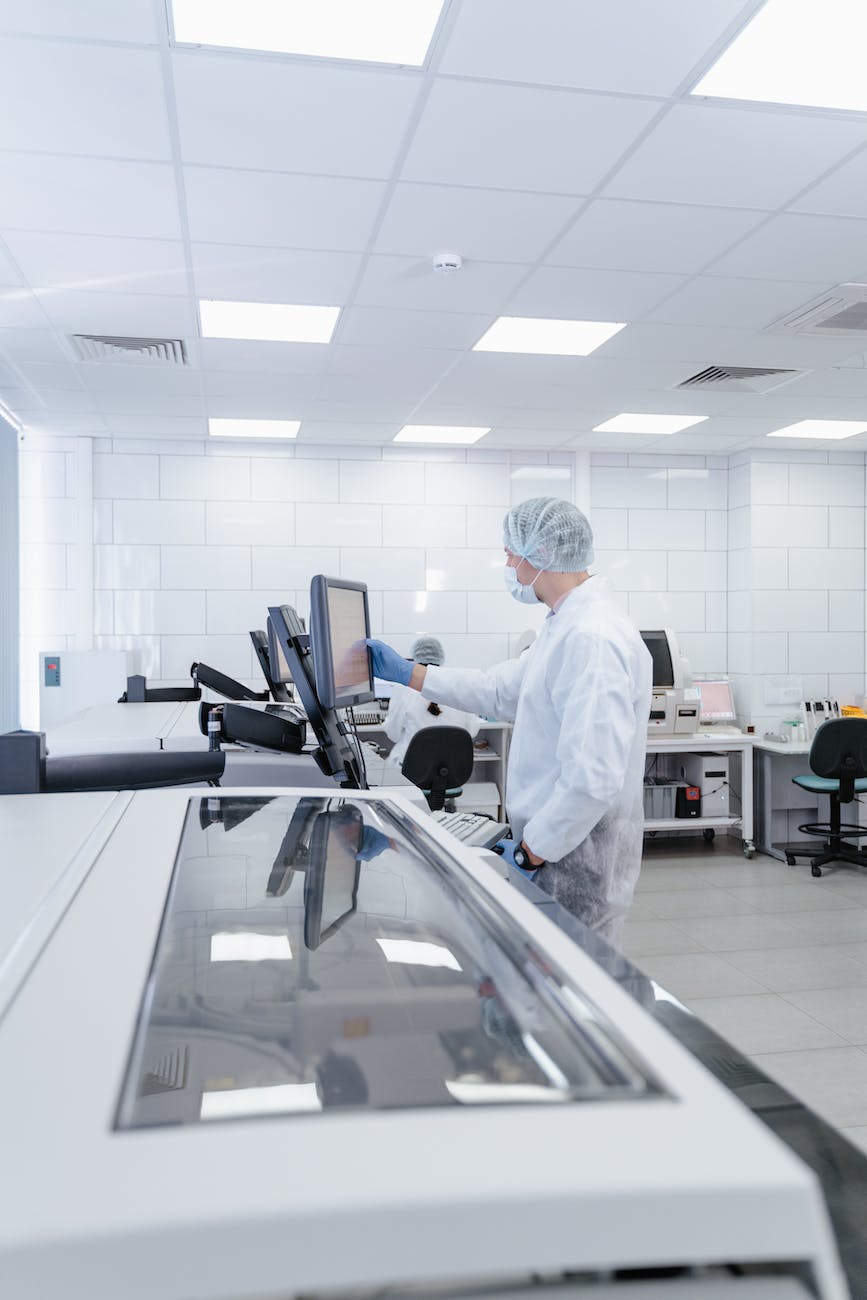
Today, most lab-grown diamonds are made through a process called chemical vapor deposition (CVD), in which carbon gas heats a diamond seed in a chamber, causing the carbon to stick to the seed and grow into a larger diamond. CVD offers greater control over the properties of the diamonds, resulting in much larger, gem-quality diamonds. CVD is attainable at relatively low pressure and temperature, making it much less costly. The process speeds up mother nature’s techniques from about a billion years to roughly 6-10 weeks.
The lab grown diamond sector has grown steadily over the past decade and research projects 9.4% annual growth and a total market size of about $50B by 2030. Yet a few headwinds remain, and much of it comes down to the public’s perception, or misperception of lab grown diamonds relative to their mined cousins.
A diamond grown in a lab is not fake. It is not artificial. It is not in any way lacking when compared to a mined diamond; not in color, physical or chemical composition. It is a true diamond, created with a considerably lower environmental footprint and free from the socio-economic issues associated with mined diamonds.
Just as the ESG movement is motivating global firms to pivot from fossil fuels such as oil and coal into clean energy sources like wind and solar, so too are major diamond suppliers sensing a change in the tides. De Beers has its own lab grown division-Lightbox Jewelry– and many other major firms have followed suit. Yet, in their efforts to protect their massive diamond mine assets, these companies portray lab grown diamonds as just a cheaper alternative instead of a better one. In 2018, De Beers Group CEO Bruce Cleaver described their lab grown diamonds as just a “fun, pretty product” that “doesn’t cost that much.”
Yet the sector has continued to grow and now the global players are in a race to integrate new technologies and even smaller companies into their plans for the future.
One of the most intriguing future buyout candidates may be Adamas One Corp., which completed its $11M IPO on the NASDAQ in December. The company is actually the second incarnation of one of the first visible firms in the lab-grown diamond space: Apollo Diamond. Apollo was perhaps the foremost pioneer of CVD technology and when it was purchased by Scio Diamond in 2011, the focus remained squarely on research and development. Yet Scio ran into production issues, primarily around an inability to acquire funding, so for a short time all of Apollo’s industry-leading technology sat idle.
In 2019, a group headed by prominent businessman Jay Grdina (pictured below from 2019 interview with Rob Bates) acquired all of the assets of Scio, including a production facility in Greenville South Carolina and a few dozen patents (now up to 36). Acquiring funding had never been a problem for Grdina, who had reached early prominence as CEO of Club Jenna, which was bought out by Playboy Enterprises. Grdina stayed on as Executive VP at Playboy for six years before going on to launch several successful business enterprises, including Ammo Inc, a publicly listed recreational ammunition firm valued at more than a quarter billion USD.

Grdina’s access to funding was just what the R&D-heavy Scio Diamond needed, and once the company was rebranded to Adamas One Corp., plans were made to become a full cycle diamond company. Patent development has remained a core principle of the company, protecting an enhanced CVD process that allows it to grow more diamonds on each plate with near 100% success rate. Grdina predicts the company will soon be able to generate about 3000 rough diamonds per month and it intends to invest in more growing machines, up to 300, in their current facility. The advanced technology doesn’t just improve diamond growing efficiency; it also gives the company one of the cleanest
environmental profiles in the industry.
While just a solitary carat of mined diamond takes 480 liters of water to produce, Adamas One runs its entire facility on just 14 liters of water per year.
And while energy will always be required for diamond growing processes, the advanced capabilities of Adams One’s technology reduces energy usage compared to its peers.
Yet perhaps the most intriguing reason to look at Adamas One is Grdina’s ability to market his companies. Take Ammo Inc in particular, founded in 2016 with $2M in revenues at the time. Fast forward to 2022 and the company now pulls in more than $250M annually. Grdina has since moved on to focus squarely on Adamas One, and his track record suggests he may achieve similar success in the diamond industry.
Challenges remain, including sector-wide falling diamond prices, which could put a strain on the entire industry until equilibrium is achieved. Adamas One will also need to fend off Lightbox and other lab grown arms of the global firms, but that is where the patents are so essential, and perhaps why the company may eventually be an attractive buyout option. Adamas One’s share price (JEWL: NAS) currently sits at a 33% discount from its IPO level and it will be on Grdina and his team to not only execute their production promises, but also recapture the marketing strategies that have served him so well in the past.
🔹 🔹 🔹
DISCLAIMER: This article shall not be construed as financial advice & it may be outdated or inaccurate at the time of reading. (i) I am neither an investment adviser nor a broker-dealer; (ii) the information presented in this material is for informational purposes only and is not to be treated as advice or a recommendation to make any specific investment or as a guarantee or prediction of the future value of any specific investment. I have not received compensation of any kind from any companies discussed in this article, but I have independently begun a small, long position in Adamas One (JEWL: NAS) and currently anticipate a 5-year investment horizon.
 mrdotto.report
Leave a comment